Welcome back to An Article I Read where I summarize a scientific article relating to female orgasm (check all the past ones out HERE). This one here is an important study related to the release of fluids during sexual arousal or orgasm in females. It is incredibly helpful in appreciating the somewhat newly identified differences between female ejaculation, squirting, and sexual incontinence- all phenomenon where liquid is released through the urethra (aka pee hole). Those different types of liquid release had previously been sort of lumped together in many scientific discussions on the topic, which complicates any attempt to really understand the phenomena.
“Nature and origin of ‘squirting’ in female sexuality” Samuel Salama, Florence Boitrelle, Amélie Gauquelin, Lydia Malagrida, Nicolas Thiounn, Pierre Desvaux. J Sex Med. 2015 Mar;12(3):661-6.
I will do a full, detailed but mostly plainly worded summary of the article, but I first want to give a quick overview so you can get the big ideas without having to read too much of my writing. I don’t throw in my opinions to the Summaries unless I clearly note that they are my own opinions, but I do mix them more into the Quick Overview section so I can include discussion about how this research fits into the larger picture of female orgasm and sexual release in our world.
The Quick Overview
The research in this article is pretty simple, but super informative. For a long time and really still today in the public, the term ‘female ejaculation’ encompassed a variety of different situations, making it hard to sensibly pinpoint what it really is. Specifically, descriptions of ‘female ejaculation’ ranged from a release of a small amount (1ml-ish) of milky liquid to large amounts of clear-ish liquid (.3ml - 150ml -aka up to 3/4 cup). Past research also found that the contents of the fluid might have either none, some, or a lot of the following: urea, creatinine, and uric acid (found in urine) or Prostatic-Specific Antigen (PSA) (found in male ejaculate).
As for what was causing the release of fluid, it is clear that the female prostate (sometimes called the Skeen’s gland) is not big enough to produce such large amounts of fluid found on the upper ends of fluid volume identified but was likely involved somehow when PSA was found in the liquid. So where was the liquid coming from and why could it be such a varied volume of liquid and with such a variety of chemical make-ups? This study helps to answer those questions.
7 women were included in the study. They were women that claimed to expel liquid in what would be considered an amount that abundantly wet the bed sheets during arousal or orgasm. Including only ‘large volume expelling’ women allowed the study to focus specifically on that type of phenomenon within the larger category of ‘female ejaculation.’ I will call that phenomenon squirting from here on (as this is slowly becoming the term used for this both in the public and in scientific investigation).
Basically the women in this study went through the process of squirting in a lab and ultrasounds were used to check their bladders. They first peed out fully - an ultrasound of their bladder confirmed it. Then they went into a private room and did things that might bring them to squirt (sexual arousal by themselves or for some, with a partner). Their bladders were checked again while aroused but before squirting - all the bladders had filled again. They all squirted and then another ultrasound confirmed that their bladders were empty again after the squirting. So, it was concluded that the liquid from squirting originated in their bladders just like urine would.
Also, the pre-squirt urination, the squirting liquid, and an after squirting urination had all been collected to test chemically. The chemicals normally found in urine were not significantly different between the 3 samples, further validating the conclusion that the liquid originated in the bladder. However, there had been an amount of Prostatic-Specific Antigen (PSA) found in most of the women’s squirting liquid (and in only 1 of the pre-squirting urination) - with a couple women that also had it in their post-squirting pee. From this it was concluded that there was probably also female prostate secretions released into the urethra that mixed with the squirting liquid. This made sense to these researchers because all the women used some form of stimulation of the female prostate area in order to squirt. (the female prostate is wrapped around the urethra that sits just above the vagina, and can be felt through the vaginal wall just inside and towards the front of the body - this is the area often called the G-Spot). So, there is probably that prostate-related ejaculatory element involved, but the amount of ejaculate that could come from the prostate is only very small, and compared to the volume of the liquid from the bladder that it mixes with, it could easily be so dilute that it doesn’t always show up in chemical analysis of squirting liquid. For the few women that still showed some PSA in their after-squirting urine - it was assumed that there might be residual contamination still from the squirting. The 1 woman that had PSA in all samples - the researchers aren’t sure why that happened - so clearly more replicating and additions to this study are needed.
The connotation here is that there are 2 very different phenomenon happening under the “female ejaculation” blanket.Phenomenon 1: very small volume ejaculations, often slightly to very milky, that probably originated fully from the prostate. Phenomenon 2: large volume expulsions that are more of a clear liquid (aka the type studied in this experiment) that originates from the bladder and may also include some liquid that originates from the prostate mixed in. The researchers clearly state that the liquid from squirting is not always too chemically different from urination, but that it is also likely not just urinary incontinence (aka an unwanted and involuntary leakage of pee due to bodily or health problems) because none of these women show any signs of urinary incontinence outside of these sexual situations. It really is the first study to clearly show that the squirting liquid does come from the bladder though - which is super informative.
The one thing that the researchers don’t have answers to but suggest there should be more research about is whether the filling up of the bladder during arousal and before squirting is just natural filling of the bladder over time or if it’s expediated as a result of the sexual activity. Specifically what they would like tested further is whether peeing a few times during the arousal and before squirting would lower the amount of liquid released for those that were interested in expelling less liquid in these situations. This curiosity from the authors seemed to come from surveys about women’s experience of sexual fluid expulsion. Many women find this kind of sexual fluid release pleasurable and express that it adds a value to their sex lives. However, a small amount in these surveys do not. And since surveys about this don’t discern between answers from women with smaller amounts of liquid expulsion and those with very large amounts, the researchers thought it might be possible that despite a knowledge that the expulsion is not related to a physical problem and is certainly a normal sexual release, very large amounts of liquid expulsion might tend to be more stressful for women that experience them, and that it’s possible some women may want help to make it less stressful.
SO all in all, this article did the work to answer a specific question about what the liquid was and where it came from when women with no past issues of bladder problems released relatively large amounts of liquid during arousal or orgasm. That answer was not obvious before, and in answering it here, we are given a real indication that the phenomenon of expelling a large amount of clearish liquid (“squirting”) is likely a different physical phenomenon than what happens when a very small amount of milky liquid is expelled (“ejaculation”). This clarity is super important if we as a culture want to create future experiments, advise, and discussion on this topic that are straightforward, realistic, and accurate - because convoluting different phenomenon only confuses issues - particularly related to scientific investigation.
*My big take-away I want you to understand
This article, with its 2 female sexual expulsion types, might seem like it provides some type of evidence that female sexual capacities are more complicated and more varied than males’. However, I’d argue it indicates just the opposite - that male and female sexual functioning is way more alike than we even imagined - in light of some other information of which I’ve recently become aware. Males, like females, may also be able to exhibit 2 different types of sexual expulsion through their urethra. The first is the ejaculation we all know and love, and the second is male squirting, a much less common phenomenon but popular in some corners of the internet (as I’ve recently learned - THANK YOU to my smart, illuminating friend at MultipleOs ). It’s not ejaculation - the phenomenon of expelling the milky stuff that comes from the prostate at (usually) the moment of orgasm. It’s more like squirts of something more urine-like, and it is often said to be stimulated by rubbing the pee hole (urethral opening) at the tip of the penis pretty aggressively. Here’s an piece about it.
Think of it this way. For all people:
Stimulating the prostate could lead to ejaculation
For males this often looks like stimulating the prostate directly and vigorously through the walls of the anus
For females that often looks like stimulating the prostate directly and vigorously through the walls of the vagina
Orgasming could lead to ejaculations
For males an ejaculation will most likley be triggered by an orgasm. The male prostate develops and matures during puberty in a certain way that makes this possible
For females the prostate does not mature through puberty in the same way and thus this trigger to ejaculate from orgasm doesn’t seem to be common. However, also because the female prostate doesn’t get such a uniform maturation during puberty, it might be more varied, and for some women this trigger might exist to varying degrees. There is certainly some anecdotal evidence for this in surveys
Stimulating the urethra or urethral opening could lead to squirting
For males this might look like the vigorous rubbing of the pee-hole described in accounts of male ‘squirting’
For females I would argue that there are a few pathways for eliciting vigorous rubbing of the urethra or urethral opening AND those pathways could intentionally or unintentionally also stimulate the prostate. That’s why it might seem like female expulsion experiences are so varied. The thing to remember is that the pee hole, the urethra, and the vagina are all relatively close together and the pee hole placement naturally varies from very close to the vaginal opening to very close to the clitoral glans (btw - It’s also true that the pee hole varies in placement on the penis too, from right at the tip down the bottom of the penis shaft, with some very low placements being indications of intersex conditions). My point is, for females, stimulating the pee hole directly could happen without much intention, depending on the type of stimulation and the spacing between the clit the urethral opening below it and the vaginal opening below that.
It could happen during some types of clitoral stimulation - possibly more likely if the pee hole is closer to the clit? maybe?
It could happen during intercourse with a penis, dildo or finger(s) in the vagina if the penetration is from a certain angle that rubs against the urethral opening. I suspect in women where the pee hole is way closer to the vaginal opening, it could maybe be more likely to inadvertently get vigorous pee hole stimulation? maybe?
Penetration could also inadvertently stimulate the urethral tube just behind the urethral opening through the vaginal wall (since the urethra lays on top of the vagina). So that might be a trigger for squirting. However, there’s also another layer of complications, because the prostate is wrapped around the urethra and is quite close to the urethral opening, so stimulating this area -often called the GSpot- through the vaginal wall might stimulate the urethra, prostate, urethral opening or all 3 and could elicit - squirting, ejaculation or both - at least that’s what I’m assuming currently.
So although it may be the same types of stimulation in both males and females that elicit these 2 sexual expulsion types, the path to creating that stimulation is more varied and intersecting for females. I want to reiterate that this connection between male and female sexual expulsion was not discussed in this paper. This is my own point of view triggered by this article and the recent male squirting info I was given - which feels revelatory for me. Like, for real, I feel like I found a puzzle piece I didn’t even know I’d lost. I feel like my mind has been low-key (maybe high-key) blown.
Full Summary
Below please enjoy a more detailed summary of the article without my opinions (unless clearly denoted as my opinions).
INTRODUCTION (This is where the authors summarize the background information on this topic and relate it to the experiment they’ve conducted. I think this is crucial to really understanding a study because it gives clues to the author’s perspective, aim, and it also makes transparent where they are getting the information on which they base their assumptions and experimental method.)
During sexual arousal or orgasm, some women have reported a release of anywhere from .03mL (a drop or 2) to 150mL (almost 3/4 cup). Although it’s hard to be sure, authors estimate that somewhere between 10% - 40% of women experience this, and this is cited by a 2013 paper with an online survey and 2 papers about female ejaculation from 1981 and 1990.
“Indeed, whereas this fluid represents, for some authors, a mere vaginal hyper-lubrification [6]; for others, it is produced by the Bartholin’s glands [7] or by the Skene’s glands [[8] , [9]], also referred to as female prostate [10 , 11]. For some other authors, this fluid is rather a urinary emission [12 , 13]. More recently, insights were obtained into this issue, in particular, with the demonstration that the fluid is actually emitted through the urethra instead of the vagina or the Bartholin’s glands [14].”
The first of these citations - [6] - is from the Kinsey Report on Female Sexuality from 1953 - which was based on in-person survey questions about sex given to a huge amount of American women and has some discussion of the Bartholin’s gland being responsible for female sexual fluid expulsion. Similarly, the other citations (which I’ve linked to their abstracts) are scientific articles with references or a point of view that links female sexual fluid expulsion to the anatomy or qualities listed prior to the citations. [ME: Nothing particularly interesting or worrisome stood out to me in the use of these citations - only a bolstering of the article’s assertion that researchers have had different understandings of this throughout the years.]
The authors note that maybe the reason for confusion and/or debate over what ejaculation is and where it comes from results from the discrepant characterization of the quality and volume of the expelled liquid among these different article. For some it is a small amount of milky liquid and others a large amount of more water liquid. Citing a 2011 case study of 1 woman that expelled liquid through the urethra during sexual stimulation, the authors, in agreement with the cited article’s conclusion, say that those 2 different expulsion types result from 2 different specific body processes.
“Therefore, we elected, in the present study, to not consider individuals reporting slight fluid emission but to focus only on those that related a regular and massive liquid discharge during arousal or orgasm, also known as ‘squirting.’” (p662)
AIM
“In this investigation, we aimed at analyzing the biochemical nature of squirting but also at exploring the presence of any pelvic liquid collection that could result from sexual arousal and explain a massive fluid emission.” (p662)
7 women, referred to the study by physicians that knew the purpose of the study, were included.
Criteria for inclusion were:
“report of regular liquid expulsion during arousal or orgasm that was comparable with, at least, that of a glass of water, which abundantly wetted bed sheets” (p662)
older than 18 yrs
Body Mass Index or BMI (between 18 and 25 kg/m2)
No history of urinary incontinence (problems holding their pee)
No chronic physical or psychological diseases
No ovarian cysts or uterine diseases
No vaginal or urinary infections
Not pregnant
These criteria helped confidently conclude that the release of fluid (squirting) the participants described was not pathology based and not urinary incontinence during sex - which might be the explanation for the release of fluids during intercourse or orgasm in women that do have a history of incontinence or disease and do not describe it as a reaction to sexual stimulation.
Just before the experiments, the women filled out a sexual history questionnaire focusing on their experience with squirting during sexual arousal and/or orgasm.
METHODS AND RESULTS: (Instead of writing out the whole experimental method and then moving on to results, a portion of the experiment methods will be discussed and then the results from that portion before moving to the next experimental portion)
Each participant peed fully. That pee was chemically tested for levels of Urea, Creatinine, Uric Acid, and prostatic-specific enzyme (PSA).
Results: All 7 women showed some level of Urea, Creatinine, and Uric Acid. Only one women showed a small amount of PSA.
They then got a bladder ultrasound to check for bladder fullness and abnormalities
Results: All women had fully empty bladders, and there were no abnormalities observed, “except for a characteristic aspect of polycystic ovaries in one patient during this examination.” (p663)
Then the women were left in a private room to receive the type of sexual stimulation they needed to produce their ejaculations. Some had a partner with them, and if sexual intercourse happened, the partner had to use a condom to ensure no ejaculate contaminated her sample.
Once the woman felt sufficiently aroused, the researchers entered the room and did another ultrasound on the bladder
Results: All 7 women’s bladders had filled again. “Bladder volume was then assessed by measuring the three inner orthogonal diameters, which are reported in Table2.” (p663)
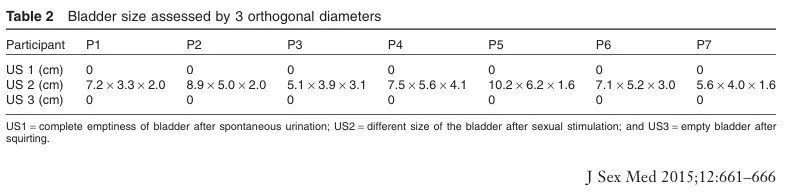
Table 2 from Nature and Origin of “Squirting” in Female Sexuality (2015)
The researchers again left the room and allowed the women to continue her sexual stimulation. When squirting occurred, the woman collected liquid in sample bags and a portion of that was chemically tested.
Results: All 7 women showed some level of Urea, Creatinine, and Uric Acid. 5 out of the 7 women showed an amount of PSA.
The researchers entered again and a final ultrasound on the bladder was immediately done.
Results: All women had completely empty their bladders again.
Finally, a sample of urine was taken and chemically tested the next time the women peed.
Results: All 7 women showed some level of Urea, Creatinine, and Uric Acid. 5 out of the 7 women showed an amount of PSA. It was the same 5 women whose squirting sample contained PSA. 4 of those 5 women had a lower concentration of PSA this time than in the squirting sample, the 5th had a similar concentration.
Level of Urea, Creatinine, and Uric Acid did not reach statistical significance between the different sample types (pre-experiment urine, squirting sample, post experiment urine) - aka no significant urine chemical differences were was found between the pre and post pee and the squirted sample. For the 5 women where it was detected at all, PSA was significantly higher in the squirting sample than in the pre-experiment sample (where it was undetected). However, the level of PSA was not significantly higher between the Post- experiment samples and the squirting sample.
All the samples were immediately frozen so they could all be chemically analyzed together. All the ultrasounds were done by the same tech for consistency.
POPULATION CHARACTERISTICS
This table below show the ages, height, weight, BMI, the age they first had intercourse, estimated amount of times they have intercourse in a month, and the amount of years since they had their first squirting experience.
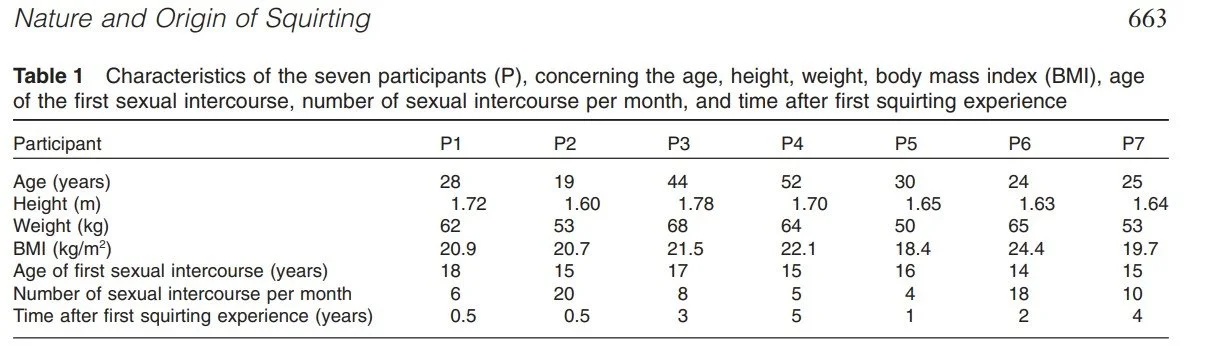
Table 1 from Nature and Origin of “Squirting” in Female Sexuality (2015)
SQUIRTING METHODS
“they reported this event as partner dependent, and in six of seven women, this fluid emission was only possible during or after digital stimulation of the anterior vaginal wall.” (p663)
[ME: Unfortunately, they did not describe anything about how the 7th woman was stimulated to squirting . Still, this is useful and important information. The stimulation of the anterior vaginal wall (aka the ‘G-spot’; aka the area the where the urethra, surrounded by the female prostate, butts up against the outside of the vaginal wall) aligns with previous anecdotal and experimental evidence that fingering that area vigorously can elicit ejaculation or squirting.]
2 women used self digital stimulation, and 5 used digital stimulation with partners.
The stimulation to squirting lasted between 25 and 60 minutes
Liquid volume ranging between 15 and 110mL (aka about 2 tsp to 1/2 cup).
“It is noteworthy to mention that participants confessed that they all have an orgasm that occurred just before or during fluid emission. They also reported that the squirting volume tended to be smaller at the experimental conditions than in private sexual practices.” (p.663)
[ME: As always, I want to remind everyone that the word ‘orgasm’ is used both in scientific writing (unfortunately) and also in common use to mean a variety of different physical events. In this situation we can’t truly be sure what the physical event is that the women are describing. It could be a physical orgasm (the rhythmic contractions of the pelvic muscles that release the blood congestion and muscle tension created through physical sexual arousal) that happened simultaneously - maybe because there was clitoral stimulation happening along with the digital stimulation of the anterior vaginal wall. They could also be describing the physical sensation of the squirting as an “orgasm” even though a physical orgasm did not also happen. It could even mean a spiritual or emotional climax that they describe as an “orgasm.” The point is that just because the women in this study said they had an orgasm in this situation does not mean that it was an actual physical orgasm. We know that it is commonly used to mean other things, and there was no physical checks for the rhythmic muscle contractions of orgasm that we could use to validate it was a physical orgams and not some other event they called an orgasm.]
DISCUSSION
“The present investigation aimed at assessing the origin and the nature of the massive fluid emission that some women experience during sexual arousal or orgasm and that are also called squirting. (p.665)
Discussions and studies of female fluid expulsion during arousal or orgasm usually mix this type of event in with other fluid emissions that originate from the female prostate (also called Skeen’s Gland or the paraurethral glands), and they’re all referred to as ‘female ejaculation.’ However, the female prostate cannot hold liquid volumes as big as those seen emitted during this study (aka during ‘squirting’). In fact a 2007 study on the female prostate found its volume is limited to around 2-4mL, yet squirting volumes could be well above 150mL.
“The purpose of our study was to associate biochemical analyses of the emitted fluid with careful research, using pelvic ultrasound scans, of any liquid collection that could be formed and released during sexual stimulation or orgasm. Our results lead us to conclude that squirting essentially is an involuntary emission of urine with a relative and unnecessary contribution of female prostatic secretions and support the hypothesis that squirting and the so-called ‘female ejaculation’ essentially are two distinct events [15,18].” (p665)
The ultrasounds showing that the bladder filled during sexual activity for all 7 women and then was completely empty after squirting “strongly supports the hypothesis that squirting is an involuntary urine emission.” (p665).
there is strong indication that squirting is related to kidney function, because “urea, creatinine, and uric acid were detected at concentrations that were very close to that observed in urine.” (p665).
It’s something of note that, in contrast to previous publications, this data did not show that the liquid emitted during squirting was particularly diluted urine…as the levels of creatine, uric acid, and urea were not lower in the liquid 'squirted’ than they were in the pre and post urination.
That most of the participants had PSA in their squirting fluid may be because they were manually stimulating their prostate during the sexual activity. “This suggests a marginal contribution of the female prostate secretions to the nature of the abundant fluid expulsion.” (p665)
It’s probably worthwhile to investigate in future studies whether the type or intensity of the sexual stimulation relates to PSA levels in the squirted fluid.
It is not clear why one of the participants showed PSA (and a sizable amount) in their pre-experiment urine. This study cannot say whether it was because of a spontaneous secretion of the prostate or from possible manual stimulation prior to the urination or from something else.
Coital urinary incontinence has been described as including 2 things, urine leakage during sexual penetration or urine leakage that occurs during orgasm. Since these women did not report squirting or urine leakage during penetration, it might be that the observed incidences of squirting may be a “form of orgasmic urinary incontinence.” (p665).
In a 1988 study titled “Urinary incontinence during orgasm,” it was found found that women with detrusor overactivity (the detrusor muscle makes up the bladder wall), orgasm triggers bladder contractions and sometimes relaxation of the sphincter (or muscle of the pee hole).
In another study it was said that detrusor overactivity was found in 69% of women that reported orgasmic urinary incompetence.
Yet a different study failed to show that women reporting female ejaculation/squirting had bladder abnormalities such as detrusor overactivity.
In another review paper [that I summarized HERE], there were cases of urinary emission during orgasm in women suffering from stress urinary incontinence, but the paper indicates they probably implicate a different mechanism than squirting.
Unfortunately, the researchers cannot say for sure that the participants in this study have detrusor overactivity because they did not have the participants got through urodynamic testing before the experiment to know for sure. “Yet, to compensate for this limitation, during the questionnaire detailing their medical history, they were asked for urinary abnormalities (either stress or coital incontinency) to confirm the absence of this exclusion criterion.” (p665)
It’s noteworthy that squirting often results from the combination of direct stimulation of the anterior vaginal wall (just inside the vagina on the wall towards the front-of-body; aka around the “G-spot” or where the female prostate sits just outside of the vaginal wall) and a specific emotional status of extreme confidence and relaxation. This indicates that some specific sexual practices might elicit this massive urinary emission when no issues such as detrusor overactivity exist.
“Finally, the impact of squirting on female sexual life could not be carefully evaluated in the present experiment.” (p665).
The authors pointed to a study from an online survey that indicated, “around four of five women with female ejaculation (or squirting) considered that this event represented an ‘enrichment’ of their sexual life.” (p665) However, that study included both very limited ejaculation volumes (.3mL) and very large volumes (15 mL to over 150ml), and didn’t discern between the two.
As the volume of the emitted fluid presumably exerts an influence on the women’s perception of this event, we cannot rule out the hypothesis that abundant squirting during sexual activity may represent a real problem to some of them. (P665)
So the authors said there deserves to be further study for women whom squirting affects the quality of their sexual life. Based on what they found in this study, they think investigating if frequent urination during sexual activity could act as a preventative measure for those women that would like that.